Prepping for Pet Owners: The Emergency Guide Most People Skip
71% of US households owned at least one pet in 2024 according to the American Pet Products Association, but most emergency plans don't account for them. Here's how to prepare your animals for any scenario.
By Rita · Founder of ReadyNotRich · Published 6 June 2026
In the aftermath of Hurricane Katrina, an estimated 600,000 pets were killed or left behind, largely because their owners had no plan for them. The American Pet Products Association reported that 71% of US households — around 94 million — owned at least one pet in 2024, yet household emergency plans routinely leave animals out entirely. The gap is not usually indifference. It is that almost all preparedness advice treats pets as an afterthought, when in practice an animal changes where you can go, how much water you need, and how quickly you can leave.
Why Pet Prep Is Genuinely Different
The central problem is that many public emergency shelters do not accept animals other than service animals, and that constraint shapes everything else. Disaster researchers have consistently found that pet owners are slower to evacuate and more likely to refuse evacuation altogether than households without animals, which is exactly why US federal law was changed after Katrina to require state and local emergency plans to account for pets. Knowing in advance where you and your animals can actually go removes the impossible choice before it arrives, rather than forcing it on you at the worst moment.
The Pet Emergency Kit
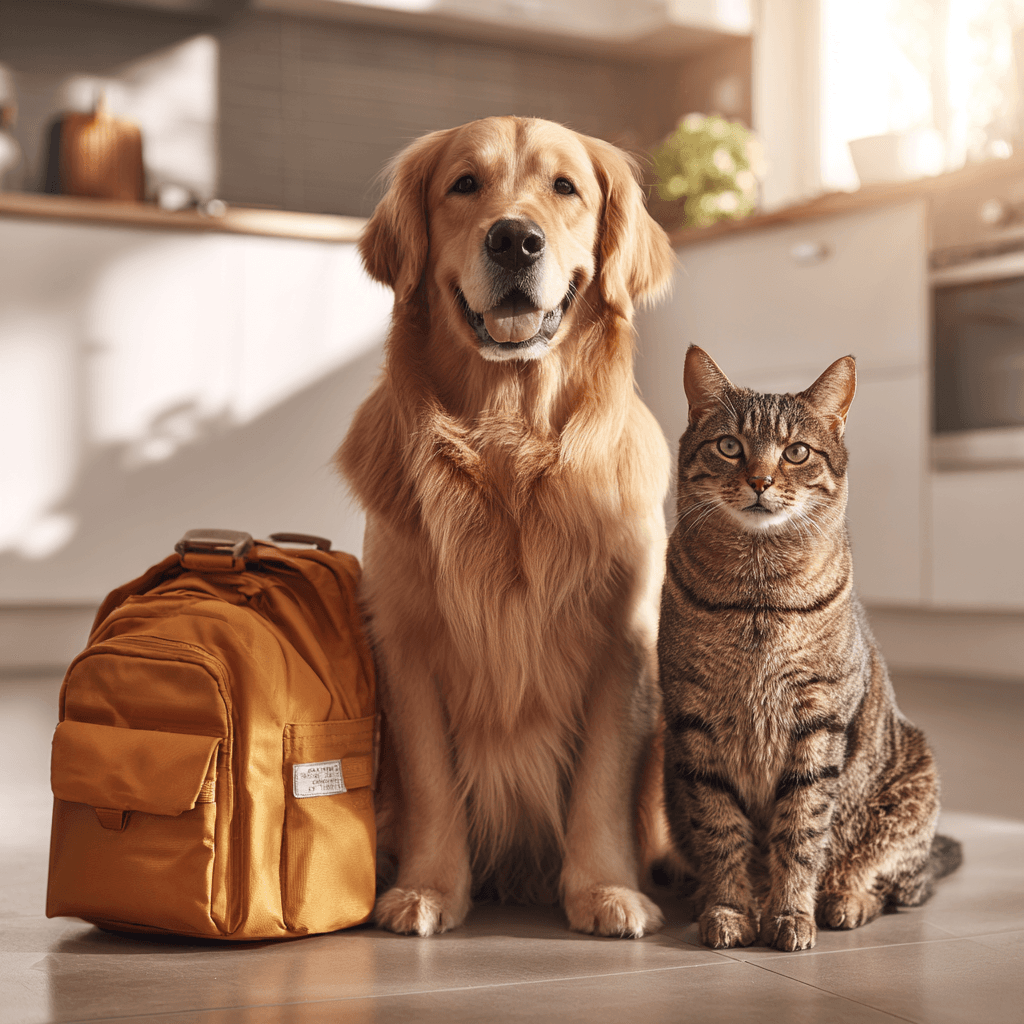
Build a dedicated pet bag and keep it beside your own, not in a different room. It should hold three days of the food your animal already eats in a waterproof container, a collapsible bowl, a spare lead and a collar with current ID tags, copies of vaccination and microchip records, a photograph of you together, any prescription medication with the dosage written down, waste bags or a small quantity of litter, and a familiar blanket or toy. Rotate the food as you would your own — a sealed bag of kibble that has been in a cupboard for three years is not emergency food, it is a sunk cost.
Water: The Calculation People Skip
The working guideline is roughly one ounce of water per pound of body weight per day, for both dogs and cats. A 30lb dog therefore needs close to a litre a day on its own, and a household with two medium dogs has effectively added an adult to its water requirement. This is the single most commonly missed line in a household water plan, because people calculate for the humans and then add the animals mentally without adding the litres. Work it out once, write the number down, and build it into your stored total rather than assuming there will be slack.
Sawyer Products Mini Water Filter
Filters up to 100,000 gallons. Removes 99.99% of bacteria. Lightweight and simple to use.
Where You Will Actually Go
Research this before you need it, because it takes twenty minutes on a calm evening and is nearly impossible under pressure. Identify which hotels in your likely evacuation direction accept animals, since many suspend pet fees during declared disasters but will not advertise that in advance. Check whether any nearby shelter is pet-friendly. Most importantly, arrange a friend or relative far enough away to be outside the same event who would take your animals temporarily, and ask them explicitly rather than assuming. A vague sense that someone would help is not a plan.
Identification, and the Detail That Breaks It
Microchipping is the most effective single step you can take, and shelters reunite chipped animals with their owners at far higher rates than unchipped ones. But the chip is only a number that points at a database record, and the overwhelming failure mode is an out-of-date phone number on that record after a house move or a change of provider. Log in and check it. Back the chip up with a physical collar tag, because a tag works for the neighbour who finds your dog in the street and a chip does not. Keep a printed photograph of you with the animal, which settles ownership questions quickly.
Medication and Medical Records
Aim for a two-week buffer of any regular medication, built by asking your vet for a slightly early repeat rather than by stretching doses. Keep it with the kit rather than in the kitchen, and write the drug, dose and timing on paper and tape it inside the bag. This matters more than it sounds: if you end up separated from your animal, or if a relative takes it for a fortnight, they will not know the routine and the packaging alone often will not tell them. Add your vet's phone number and a one-page summary of any ongoing condition.
Keeping the Animal Calm
Emergencies are frightening and disorienting for animals, and a panicking pet is a genuine practical problem — it bolts, it bites, it will not go into a carrier. A familiar blanket or a worn t-shirt in the carrier gives it a known scent to settle against in an unfamiliar place. Pheromone sprays are inexpensive and fit in a bag. Practise getting the animal into its carrier now, calmly and with food, so the carrier is not something that only appears on the worst day of its life. For a genuinely anxious animal, discuss sedation options with your vet in advance rather than during the crisis.
Livestock, Reptiles and Everything Else
Cats and dogs dominate the advice because they dominate the numbers, but the animals that are hardest to evacuate are the ones with environmental requirements. Reptiles and fish depend on heated or filtered water and will not survive a long power cut without intervention, so a battery air pump, an insulated cover or a plan to move them matters more than a food supply. Horses and livestock cannot be improvised at short notice at all and need an agreed destination, transport and identification marked on the animal itself. If this is your situation, the planning has to happen months ahead, not in the kit.
The Ten Minutes That Matter Most
If you do nothing else from this page, do three things. Check that the microchip registration has your current phone number. Write down where you would take your animals if you could not stay in your home, and confirm it with whoever is at that address. Add your animals' water requirement to your household total. None of it costs anything, all of it can be done this evening, and together it covers the failures that actually separate people from their pets — not a missing item of equipment, but a decision nobody had made in advance.
Your pet preparedness checklist
- Check your pet's microchip registration shows your current phone number and address.
- Fit a collar with a legible ID tag, since a tag works for whoever finds your animal in the street.
- Print a photograph of you together and keep it in the kit as proof of ownership.
- Calculate your animals' water needs at roughly 1 ounce per pound of body weight per day and add it to your household total.
- Pack three days of the food your pet already eats, in a waterproof container, and rotate it.
- Build a two-week buffer of any regular medication and write the dose and timing on paper.
- Add copies of vaccination and microchip records, plus your vet's phone number.
- Identify pet-friendly hotels in your likely evacuation direction, and confirm a friend or relative who would take your animals.
- Pack a spare lead, a collapsible bowl, waste bags or litter, and a familiar blanket or toy.
- Practise getting your animal into its carrier calmly, so the carrier is not a thing that only appears in a crisis.
- Plan separately for reptiles, fish or livestock, which depend on heat, filtration or transport you cannot improvise.
- Keep the pet bag beside your own kit, not in another room.
Frequently asked questions
How do I prepare my pets for an emergency?
Prepare pets for emergencies by building a dedicated pet emergency kit: 3 days of food and water, spare lead and collar with ID tags, vaccination records, any prescription medications, and a photo of you with your pet for reunification. Research pet-friendly emergency shelters and hotels in your area before a disaster strikes.
How much water does a dog need in an emergency?
Dogs need approximately 1 ounce of water per pound of body weight per day. A 30lb dog needs nearly 1 litre per day. Factor your pet's water needs into your household emergency water storage calculations — most people forget to. A Sawyer Mini filter works equally well for pet water.
What should be in a pet emergency kit?
A pet emergency kit should include: 3 days of food in a waterproof container, a collapsible water bowl, spare lead and ID tags, copies of vaccination and microchip records, any medications with dosage instructions, a photo of you with your pet, and a familiar blanket or toy to reduce stress during evacuation.
Will emergency shelters accept my pets?
Many emergency shelters do not accept pets, though this is improving. Research pet-friendly shelters in your area at petfriendlyshelters.com before an emergency. Identify pet-friendly hotels and a contact outside your local area who could temporarily house your pets. Planning ahead means you won't face an impossible choice during a disaster.
How do I make sure I get my pet back if we are separated?
Microchipping is the single most effective step, but only if the registration details are current — shelters reunite chipped animals at far higher rates than unchipped ones, and the most common failure is an out-of-date phone number on the chip record. Back it up with a collar tag and a printed photograph of you with the animal, which proves ownership quickly.
How much pet medication should I keep in reserve?
Aim for a two-week buffer of any regular medication, built by asking your vet for a slightly early repeat rather than by rationing doses. Keep it with the kit rather than in a kitchen cupboard, and write the dosage down — if someone else ends up caring for your animal, they will not know the routine.
Related guides
How to Build a 30-Day Food Supply for $200
A month of emergency food does not have to cost a fortune. This guide covers the calorie maths, the staples list, the storage that actually works, and the nutritional gaps nobody warns you about.
Read guide →Your Emergency Document Kit: The Records You Will Need and How to Protect Them
Insurance claims, disaster aid and re-entry to an evacuation zone all run on paperwork. Here is exactly which documents to gather, how to store them safely, and the home inventory video that pays for itself.
Read guide →Extreme Heat Preparedness: Staying Safe When It Is 100F and the Power Is Out
Heat is among the deadliest weather hazards there is, and almost all prepping advice is written for cold. Here is how to cool a home without air conditioning, hydrate properly, and spot heat stroke before it is critical.
Read guide →From ReadyNotRich
The Emergency Binder
Supplies are the easy half. The other half is the information you cannot look up when the power is out — policy numbers, prescription doses, where the stopcock is, who collects the children. 22 printable A4 pages to write it all down once. It is coming soon — join the waitlist and we will tell you the moment it is ready.